|
Courses |
Northern Breezes Sailing School Coastal Navigation: Advanced Cruising Techniques |
||||
|
Frequently Asked Questions FAQ General Youth Sailing Program- Keelboats Basic Keelboat Lake Minnetonka Basic Keelboat White Bear Lake Bareboat Charter Lake Superior
Cruising Catamaran Advanced Coastal Cruising Lake Superior Vacation Courses Lake Superior British Virgin Islands Learning Adventures British Virgin Islands Cruising Catamaran British Virgin Islands Flotilla Sailing British Virgin Islands Sail and Dive |
Classroom Location: Spirit of Hope Church, 7600 Harold
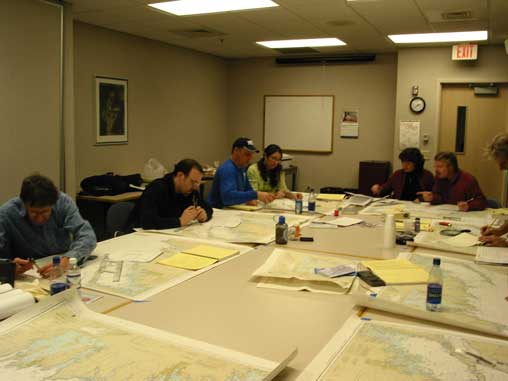
Ave, Golden Valley, MN 55427. Directions: Located adjacent to Hwy 55 just west of Hwy 100 and just east of Hwy 169. From Hwy 100 exit Glenwood Avenue and go west to Harold Avenue just one block from Hwy 55, turn west or left. The church is on the right. From Hwy 169 exit Hwy 55 east. Turn right on Winnetka Avenue and left on Harold Avenue. The church is on the left. Coastal Navigation: Advanced Cruising Techniques - ASA Course 105 Students learn the navigational theory and practical skills required to safely pilot a sailing vessel in coastal or inland waters with a focus on real world, practical navigation. The course is taught in a classroom setting with plenty of chart work to exercise various learning segments. Students progress from dead reckoning to more complicated piloting incorporating current, leeway, and the integration of electronic navigation. Students become familiar with GPS usage and are introduced to Radar basics. Students learn to use tide and current tables, light lists, Chart No. 1, Notice to Mariners, and other tools. Students earn American Sailing Association certification for Coastal Navigation upon successful completion of course. Instructors are Captain Thom Burns, retired U.S. Navy Navigator/North Atlantic Crossing Navigator, and Captain Steve Burns, North Atlantic and North Sea crossings Navigator.
The evening course meets six
times and allows plenty of weekend chart/problem time. The
Saturday course meets three times. Both classes require dedicated
practice time in order to get the most out of the class. Course Outline for Evening Class Day 1: NAVIGATION, PILOTING AND CHARTS. Measuring direction and distance; utilizing the compass rose. READING NAUTICAL CHARTS. Chart symbols: Buoys, beacons, lights, soundings and danger symbols. Day 2: DEAD RECKONING NAVIGATION. Measuring and plotting direction and distance, bearings and courses; speed-time-distance calculations, tacking upwind. BEARINGS AND FIXES. Using hand bearing compasses; plotting more bearings, use of soundings, deriving an estimated position, dipping a light, bow/stern versus beam bearings. BASIC GPS INTEGRATION. Day 3: CORRECTING YOUR COURSE FOR CURRENT AND LEEWAY. Course, heading and track; determining set and drift of current; measuring leeway. TIDES AND TIDAL CURRENTS. Causes of tides and currents; using tables to predict height of tide, and set and drift of current; tidal current charts; visual indicators of current; shoaling effect; counter currents, insetting effect. FOG NAVIGATION. DR in fog; depth meter navigation; bearings in fog; Polynesian concepts and visual observations; surviving with shipping; Currents in fog. MORE GPS INTEGRATION. Day 4: RULES OF THE ROAD. Right of way; avoiding close calls; skipper responsibilities; lights and Dayshapes; sound signals. ELECTRONIC NAVIGATION. GPS waypoints and routes, cross track errors, hierarchy of commands. Introduction to RADAR. MORE GPS INTEGRATION. Day 5: REVIEW AND FUN PROBLEMS. Transiting problems on Lake Superior from the Apostle Islands. Attendance at this session is optional but highly recommended. Day 6: EXAMINATION. Written exam
cements independent navigational thinking and completes ASA
requirements for Coastal Navigation certification. Course Outline for Saturday Class Day 1: NAVIGATION, PILOTING AND CHARTS. Measuring direction and distance; utilizing the compass rose. READING NAUTICAL CHARTS. Chart symbols: Buoys, beacons, lights, soundings and danger symbols. DEAD RECKONING NAVIGATION. Measuring and plotting direction and distance, bearings and courses; speed-time-distance calculations, tacking upwind. BEARINGS AND FIXES. Using hand bearing compasses; plotting more bearings, use of soundings, deriving an estimated position, dipping a light, bow/stern versus beam bearings. CORRECTING YOUR COURSE FOR CURRENT AND LEEWAY. Course, heading and track; determining set and drift of current; measuring leeway. BASIC GPS INTEGRATION. Day 2: TIDES AND TIDAL CURRENTS. Causes of tides and currents; using tables to predict height of tide, and set and drift of current; tidal current charts; visual indicators of current; shoaling effect; counter currents, insetting effect. FOG NAVIGATION. DR in fog; depth meter navigation; bearings in fog; Polynesian concepts and visual observations; surviving with shipping; Currents in fog. More GPS INTEGRATION. RULES OF THE ROAD. Right of way; avoiding close calls; skipper responsibilities; lights and day shapes; sound signals. ELECTRONIC NAVIGATION. GPS waypoints and routes, cross track errors, hierarchy of commands. Introduction to RADAR. More GPS INTEGRATION. REVIEW AND FUN PROBLEMS. Transiting problems on Lake Superior from the Apostle Islands. Attendance at review session is optional but highly recommended.Day 3: REVIEW AND EXAMINATION. Written exam cements independent navigational thinking and completes ASA requirements for Coastal Navigation certification. Independent Study Class / Correspondence. This course has been successfully completed by several students who are remotely located. It usually requires some time spent with a navigation instructor by email or telephone. Cost is $109 for the correspondence course which comes with a book/study problems, and chart. The fee includes testing. We like to interview prospective students in this category. Please Call. Course Fee: $199 includes course materials: Navigation Textbook and practice chart.
Available for purchase: Navigation instruments
by Weems & Plath. CLASS SCHEDULE:
Winter - January 2009
N1: 9AM-4PM Saturdays, with lunch break
This is an intense class due to the three Saturdays of
seven hours per day. Please allow time for study and practice
problems in addition to our normal in-class problems.
Spring
2009 (Dates are subject to change)
N2: 6:00-9:00 PM Thursday Evenings
This is an intense class due to the three Saturdays of
seven hours per day. Please allow time for study and practice
problems in addition to our normal in-class problems.
Northern Breezes
Sailing School © 2007 Sailing Breezes Internet Magazine Minneapolis, MN USA - All Rights Reserved. |
||||